
Learn
The science behind the light
Every image is a measurement of real objects. Here is what each one shows, and why it looks the way it does.
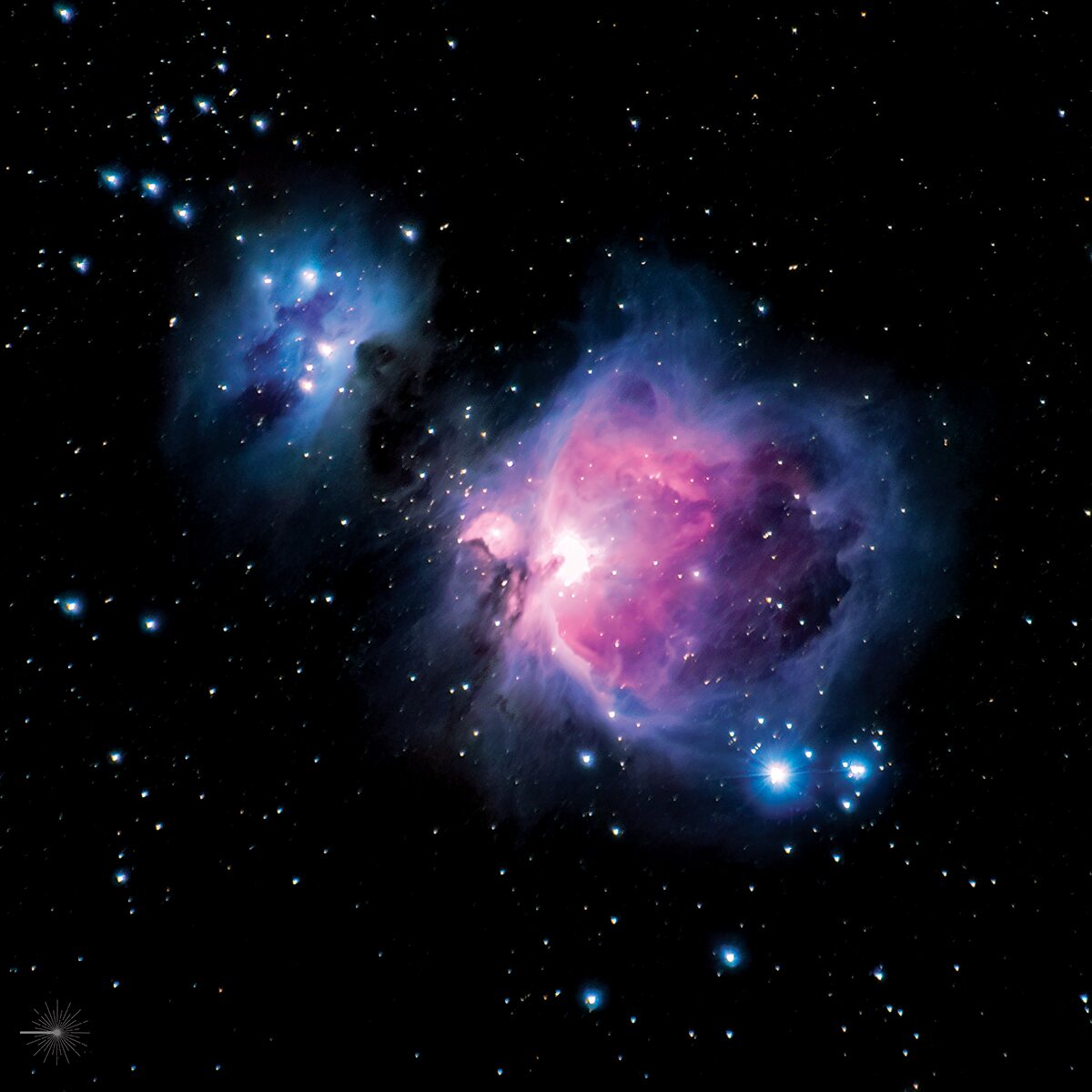
M42 · M43 · 1,344 ly
The Orion Nebula
The Orion Nebula is the closest large region of star formation to Earth. Inside it, clouds of hydrogen collapse under gravity until their cores grow hot enough to ignite.
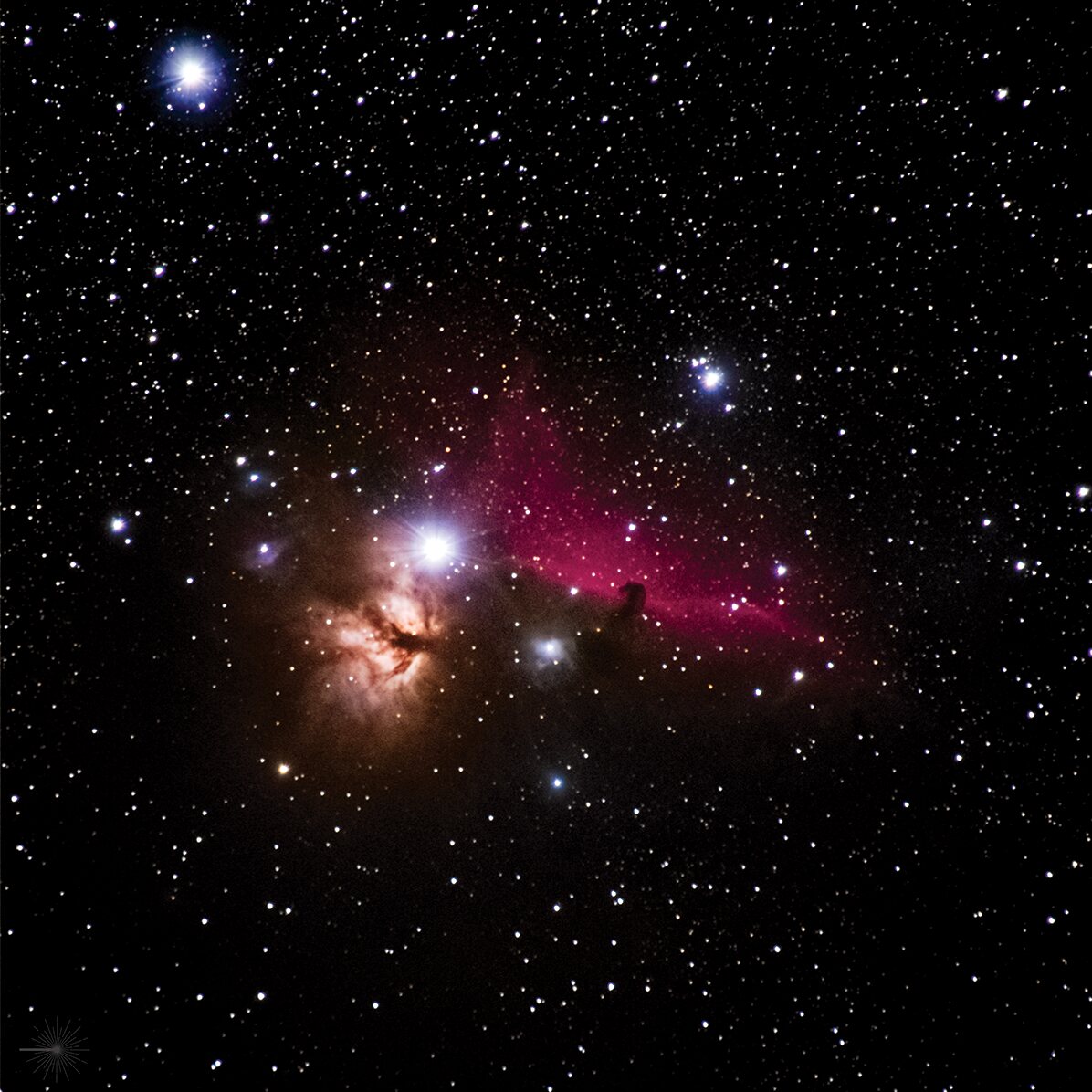
NGC 2024 · B33 · ~1,400 ly
Flame & Horsehead
The Horsehead is a dark nebula — a cold pillar of dust silhouetted against the glowing hydrogen of IC 434 behind it. Its shape is temporary on cosmic timescales and will erode over a few million years.
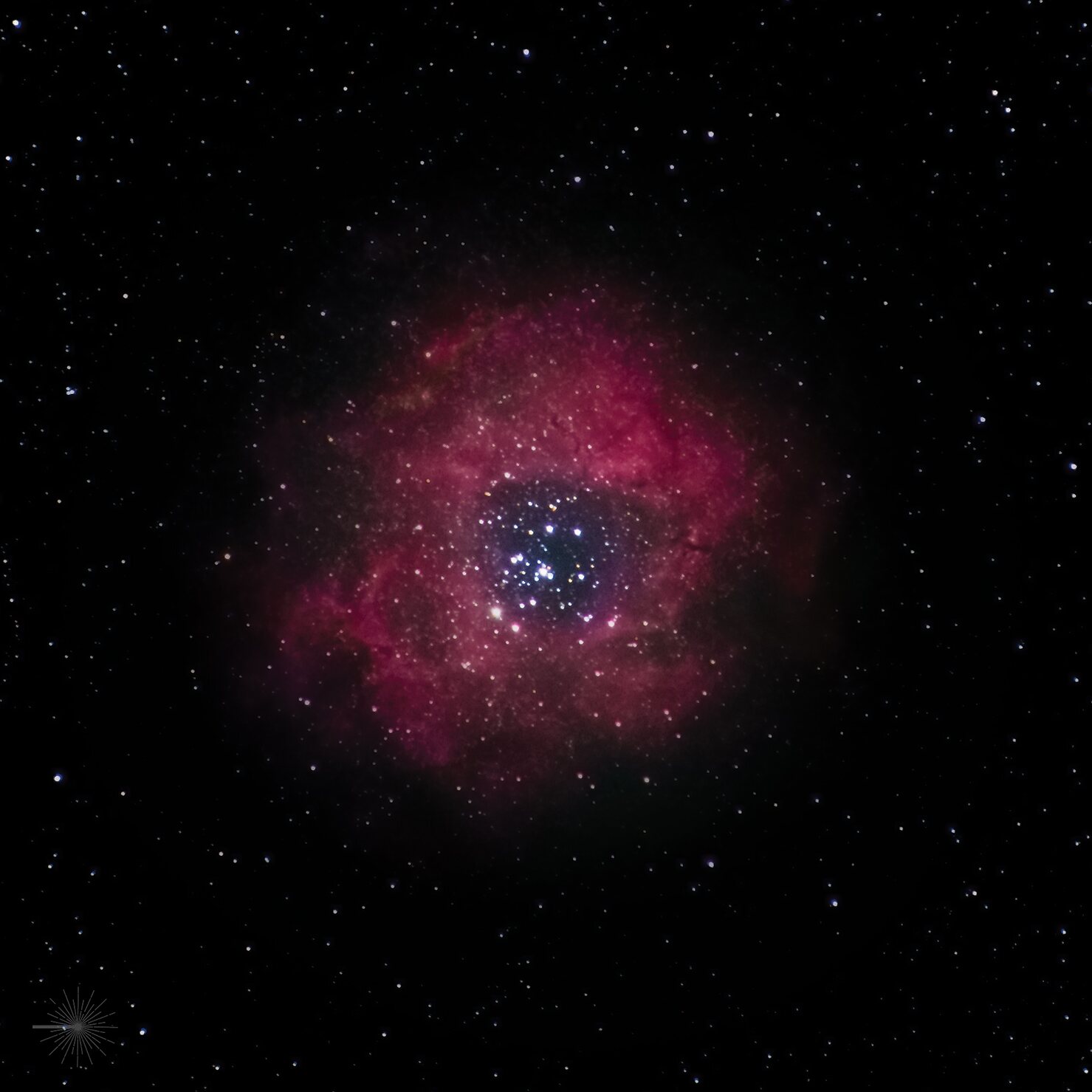
NGC 2237 · ~5,200 ly
The Rosette Nebula
At the centre of the Rosette sits the open cluster NGC 2244. Winds and radiation from its hot stars have blown a hollow in the surrounding gas, giving the nebula its ring shape.
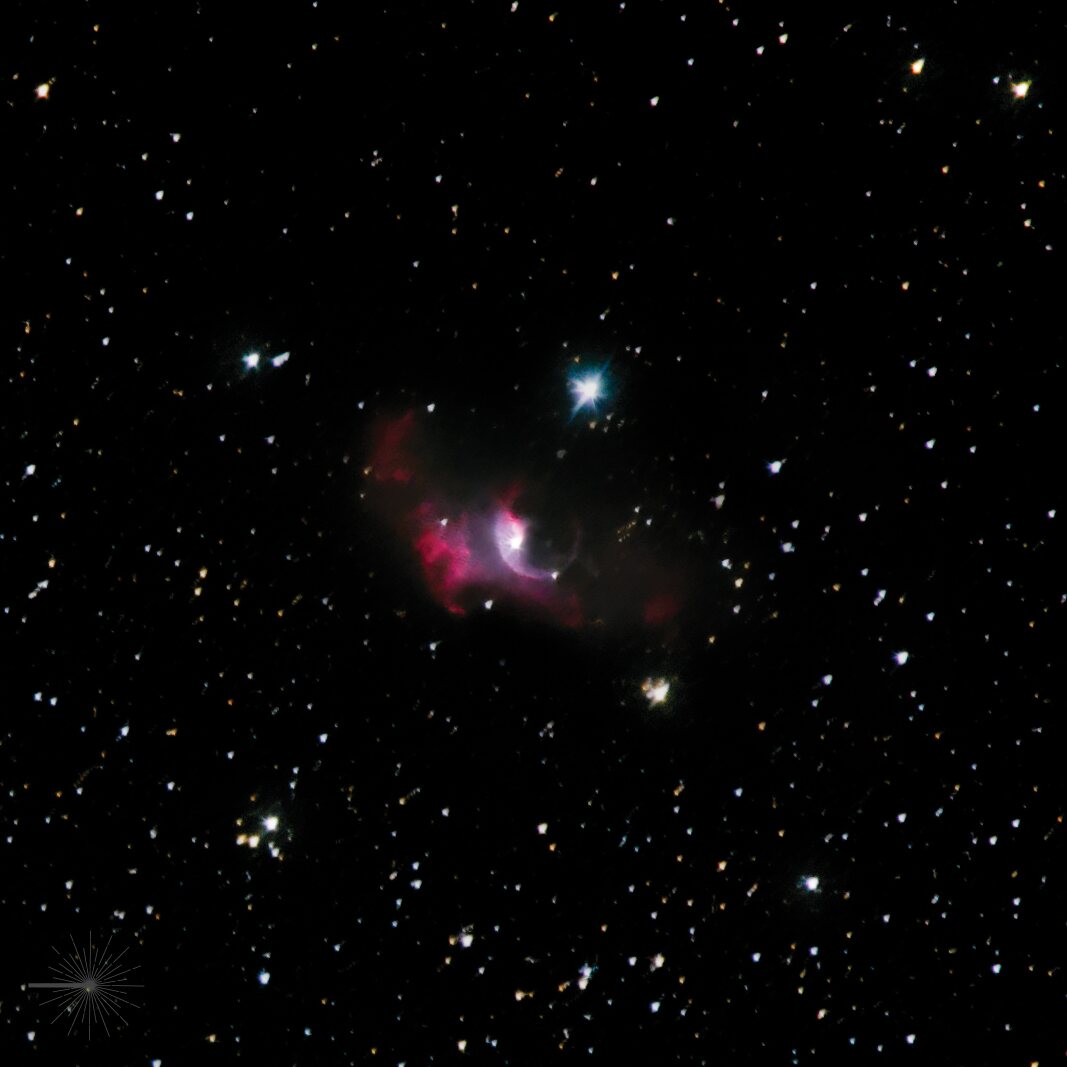
NGC 7635 · ~7,100 ly
The Bubble Nebula
The Bubble is inflated by the stellar wind of one hot, massive star, roughly 40 times the mass of the Sun. The wind sweeps up surrounding gas into a thin shell, which glows where the star's ultraviolet light ionises it.
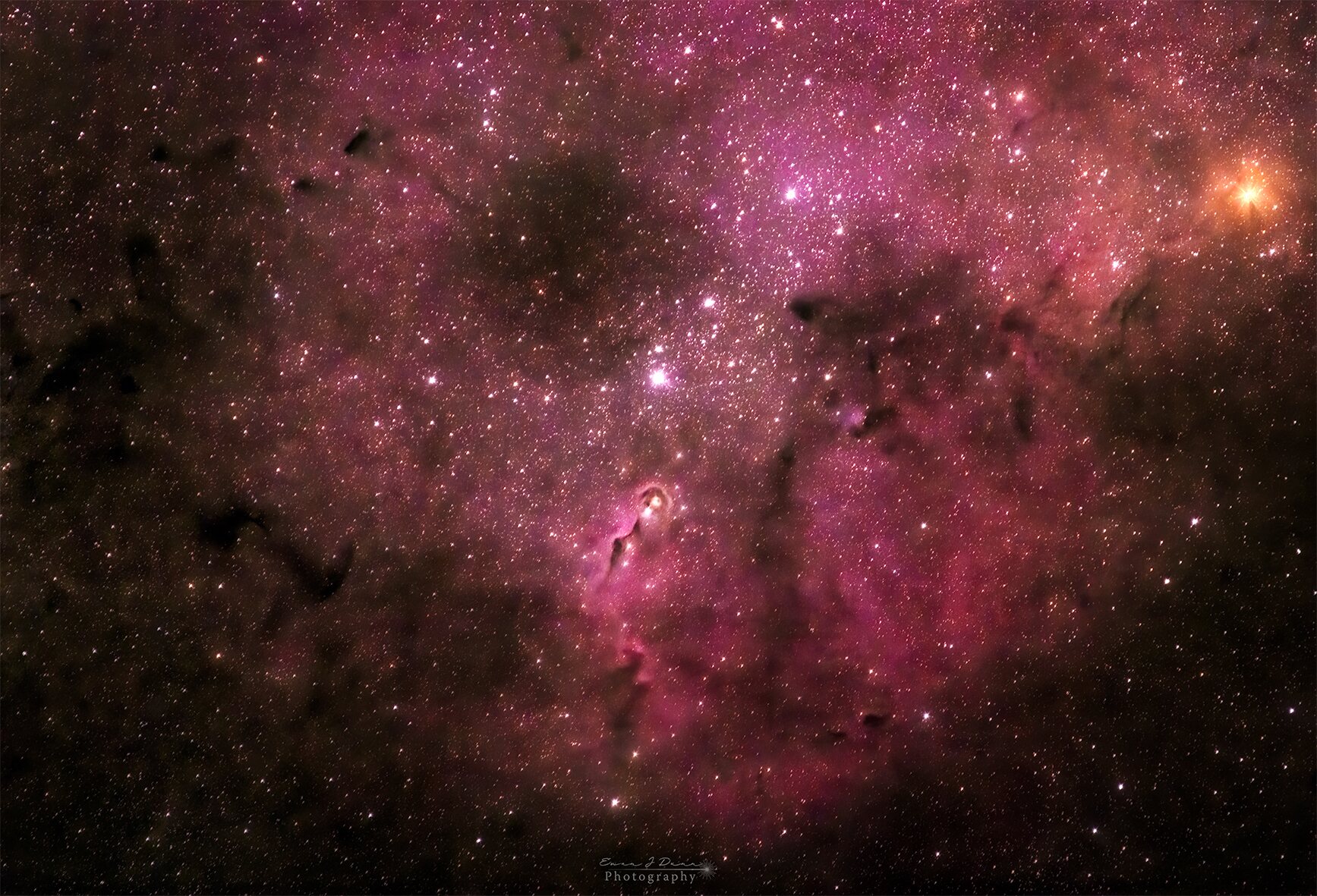
IC 1396 · ~2,400 ly
The Elephant's Trunk
The Elephant's Trunk is a dense globule of gas being sculpted by radiation from a massive star nearby. Its bright rim marks where that light is eroding the cloud's surface.
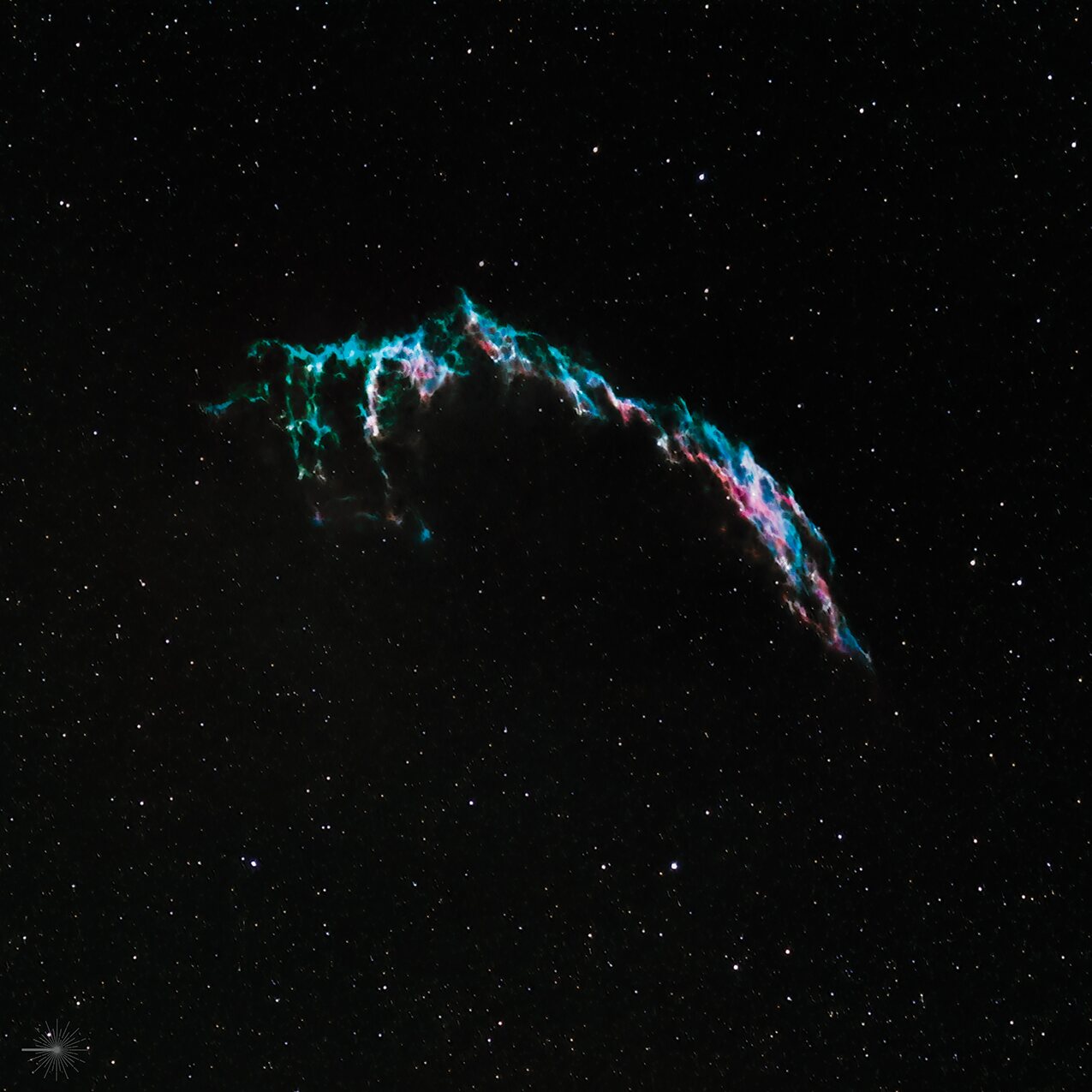
NGC 6992 · ~2,400 ly
The Eastern Veil
The Veil is the remains of a supernova that happened roughly 10,000–20,000 years ago. The blast wave is still expanding, heating the gas it runs into until it glows.
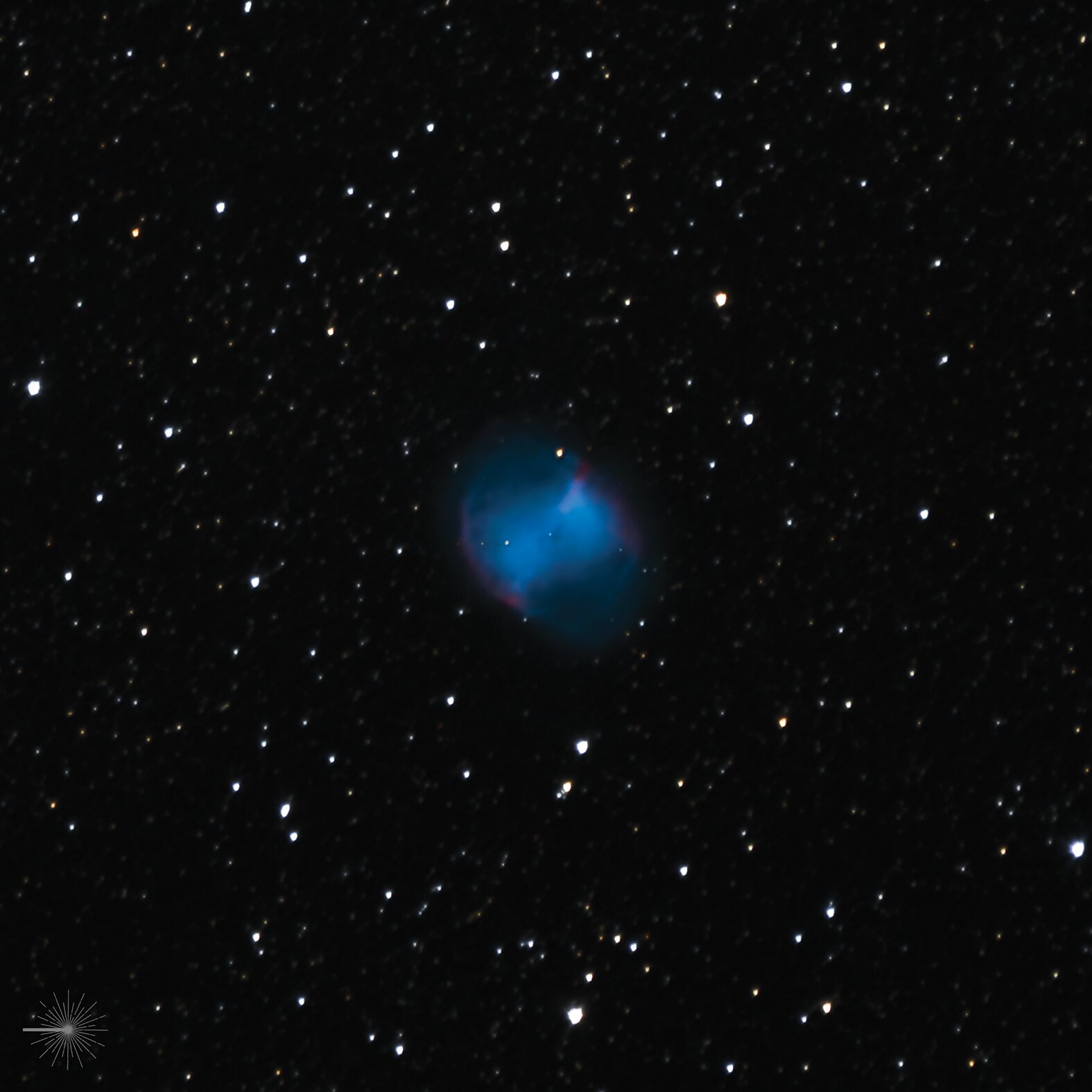
M27 · ~1,360 ly
The Dumbbell Nebula
The Dumbbell is a planetary nebula: when a star like our Sun runs out of fuel, it sheds its outer layers. The exposed hot core lights up the expanding gas.
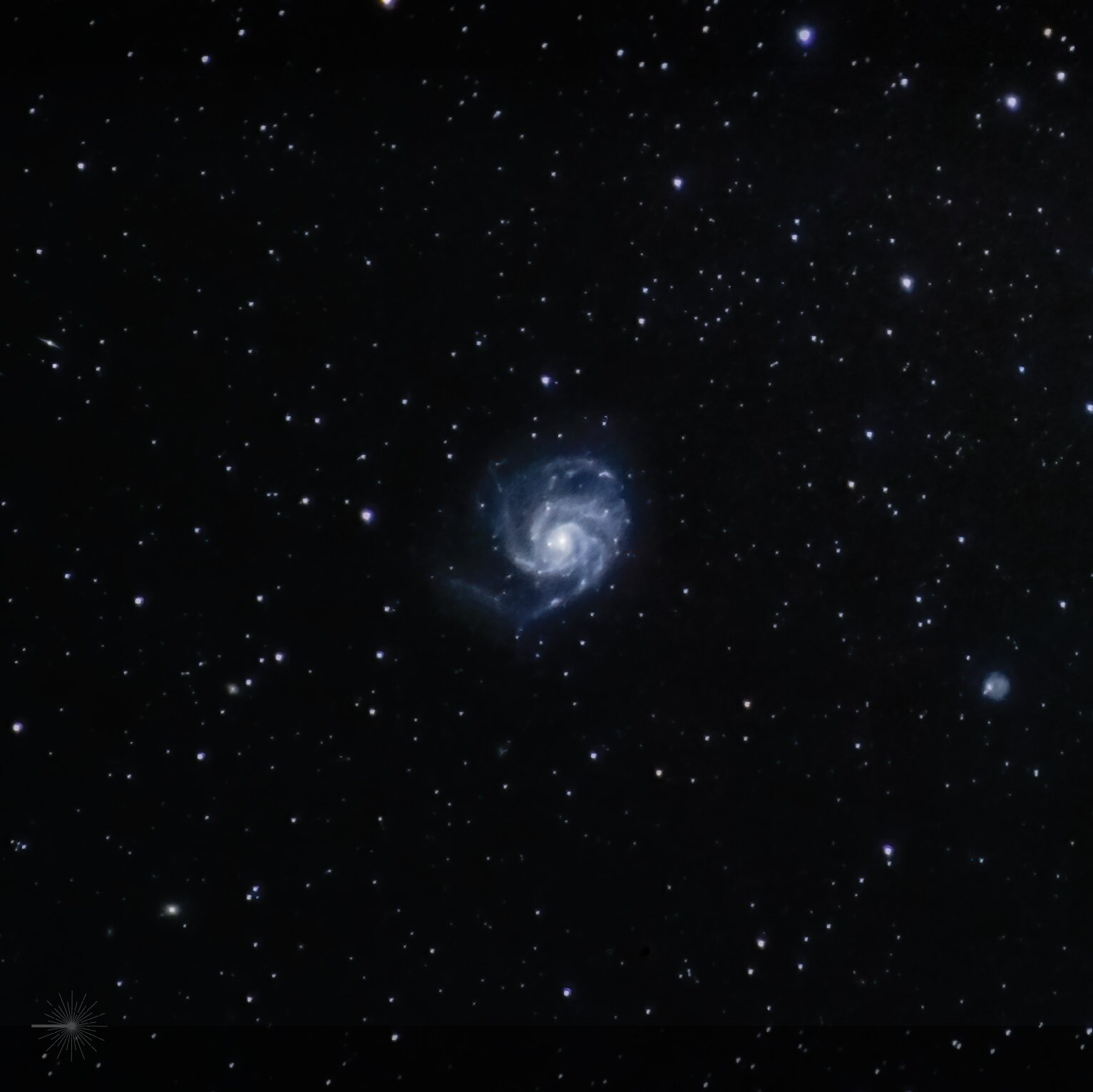
M101 · ~21 million ly
The Pinwheel Galaxy
We see the Pinwheel almost exactly face-on, which shows off its spiral arms. The arms are lined with bright regions where new stars are forming.
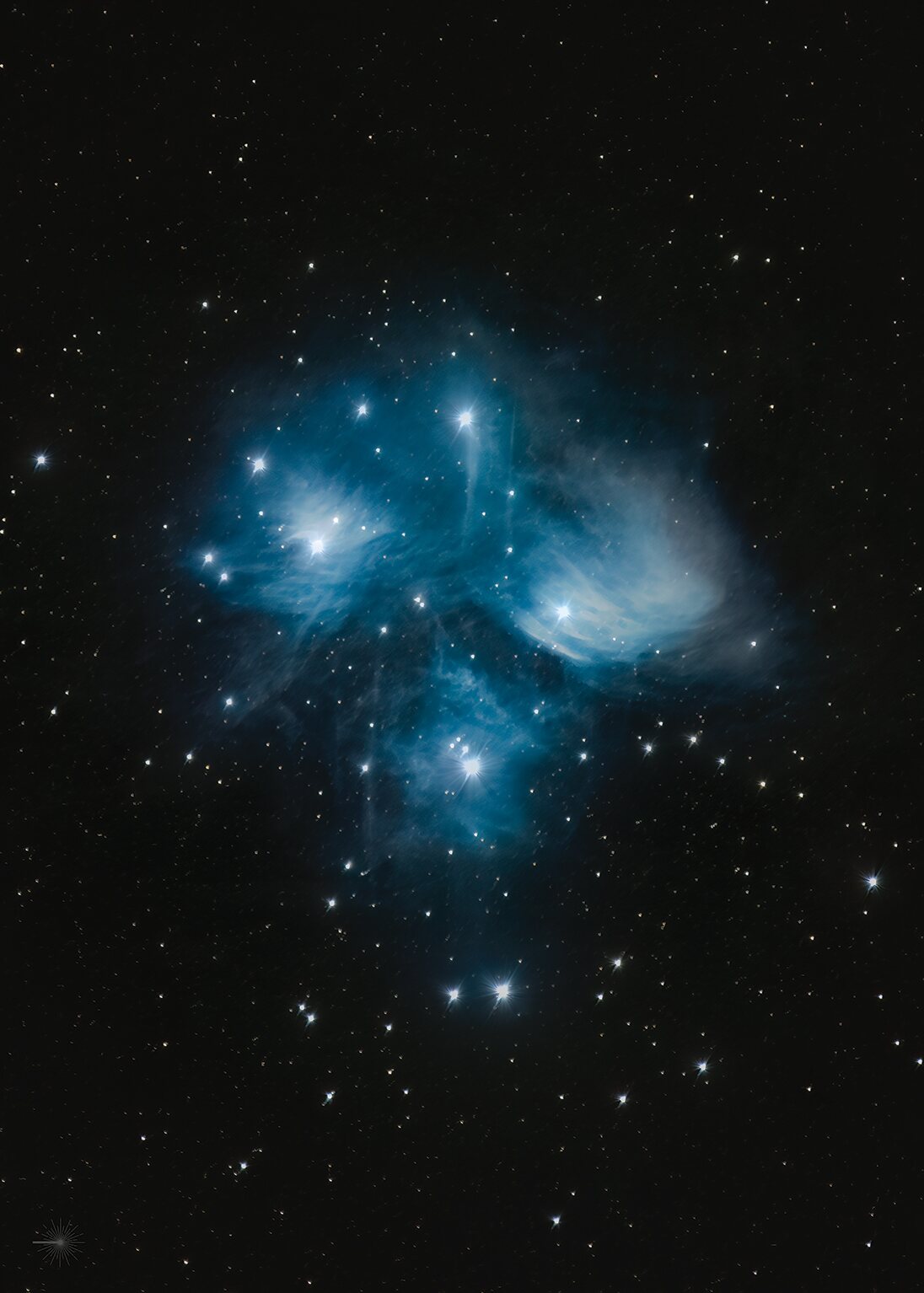
M45 · 444 ly
The Pleiades
The Pleiades are a family of hot, blue stars born together around 100 million years ago — young by cosmic standards.
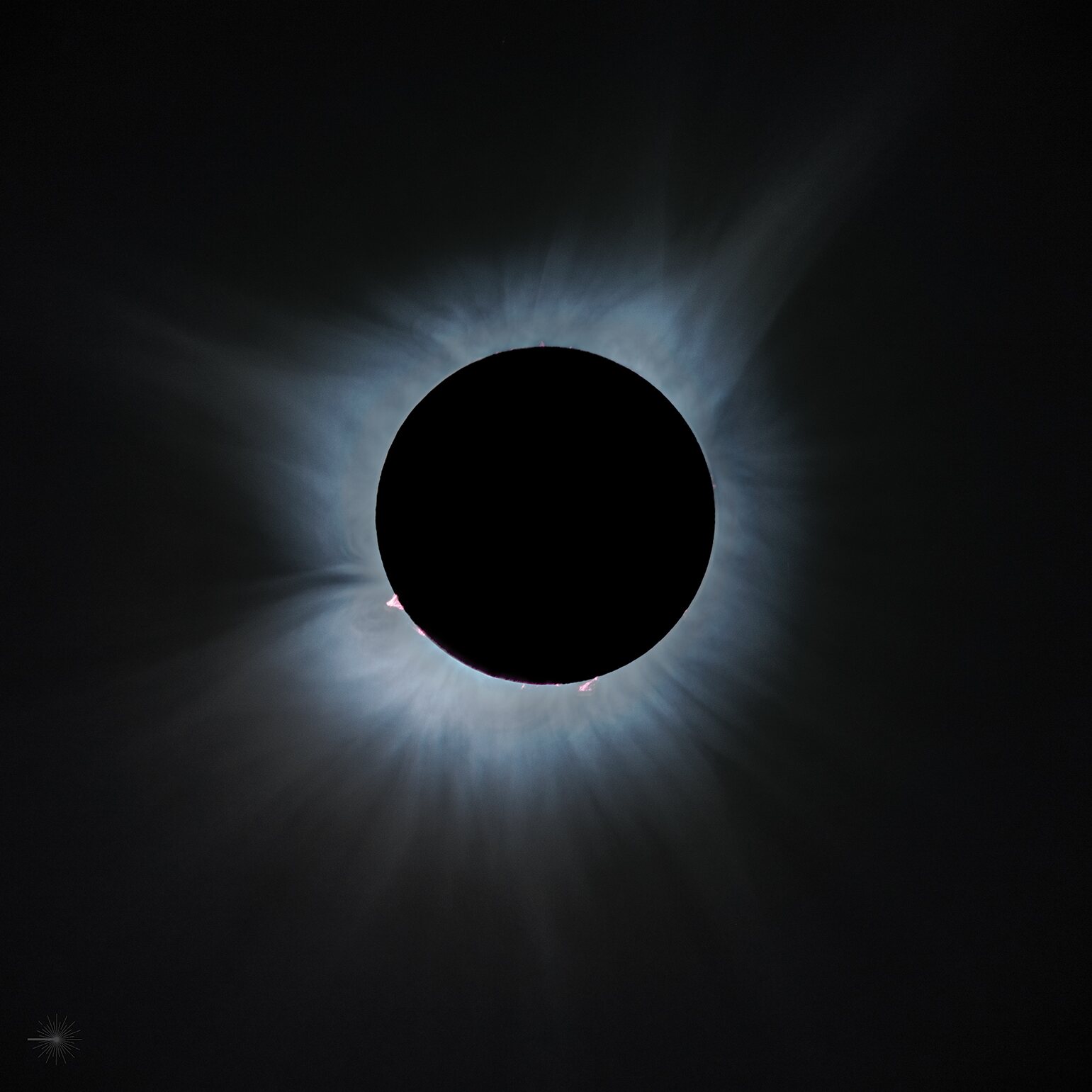
Total solar eclipse
Totality
The corona is the Sun's outer atmosphere, over a million degrees but far fainter than the Sun's surface. Only when the Moon blocks the surface exactly can we see it.
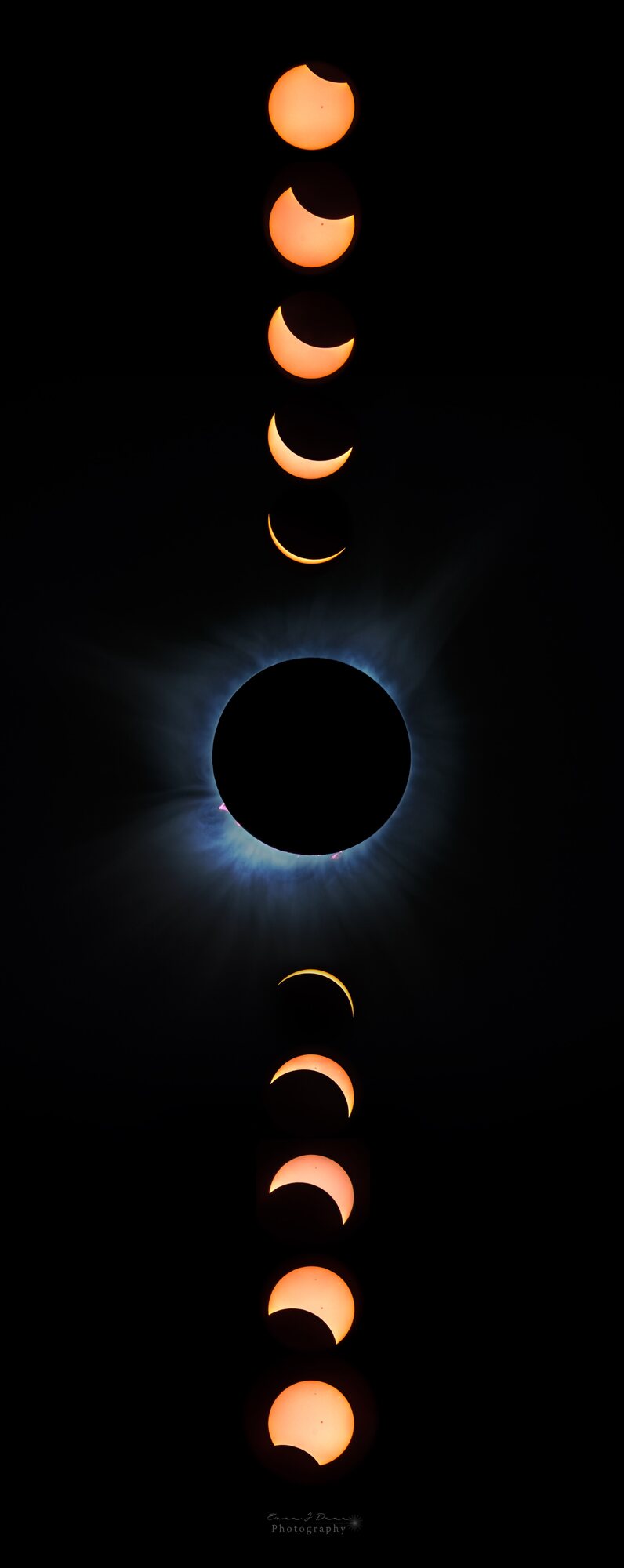
Total solar eclipse
Eclipse Sequence
Each frame shows the Moon covering a little more of the Sun, through totality in the middle, and then uncovering it again. The whole event takes around two and a half hours.
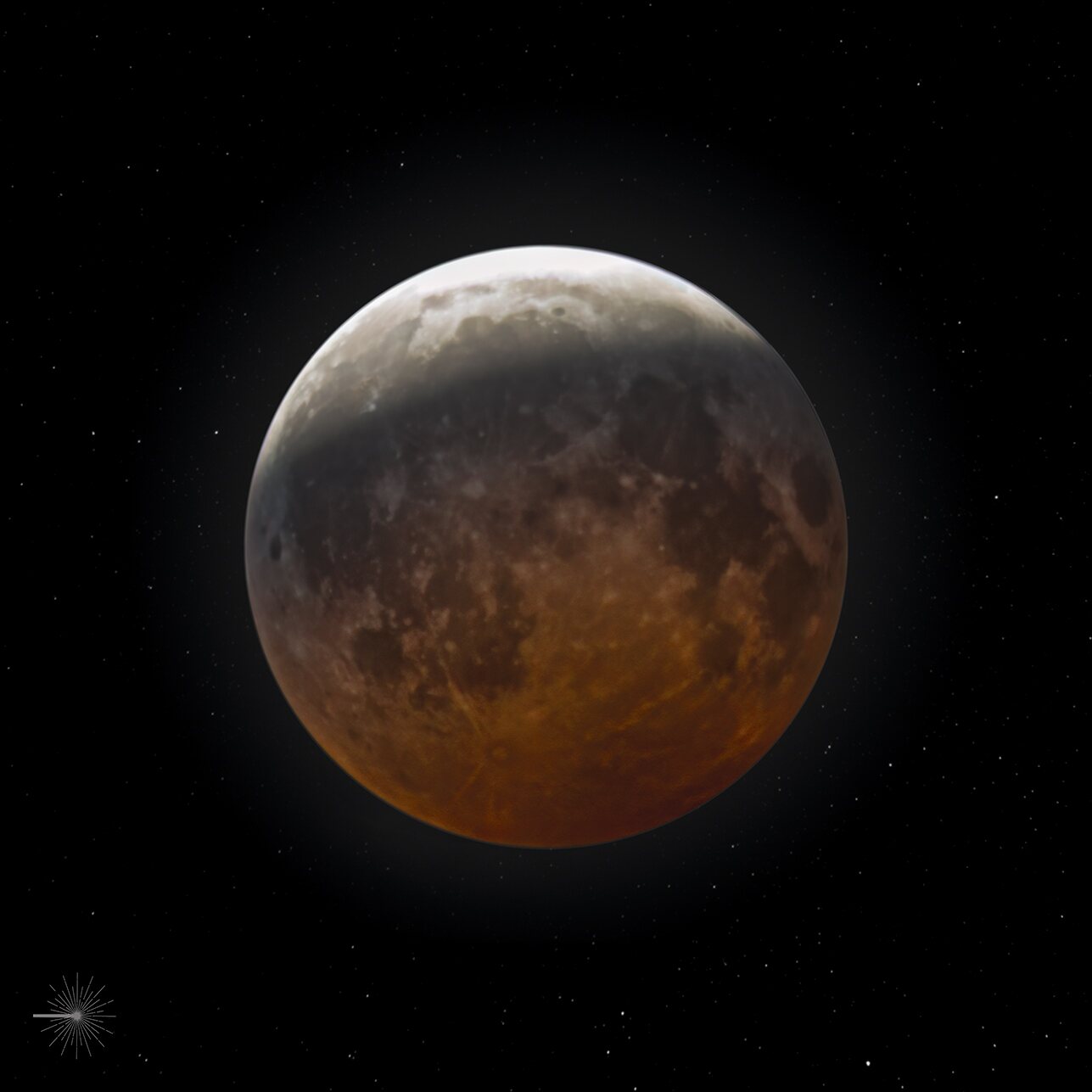
Blood Moon · ~384,400 km
Lunar Eclipse
During a total lunar eclipse, the Moon passes into Earth's shadow. It doesn't go dark: sunlight bends through Earth's atmosphere, which filters out blue light and leaves a red-orange glow — every sunrise and sunset on Earth at once, cast onto the Moon.
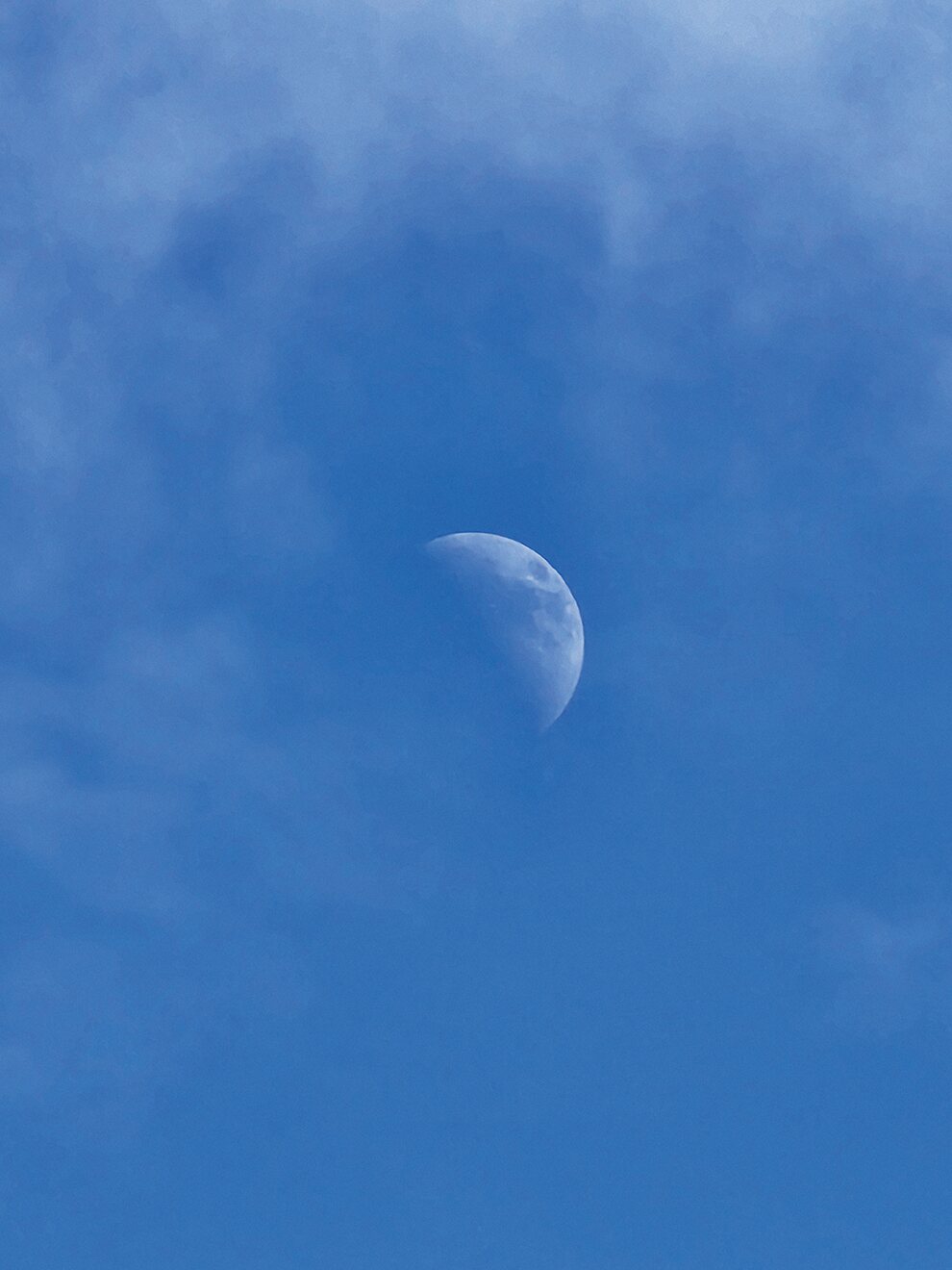
Crescent Moon · ~384,400 km
Daytime Moon
The Moon is above the horizon during daylight about as often as at night. It is bright enough to show through the scattered blue light of the sky, especially near first and last quarter.
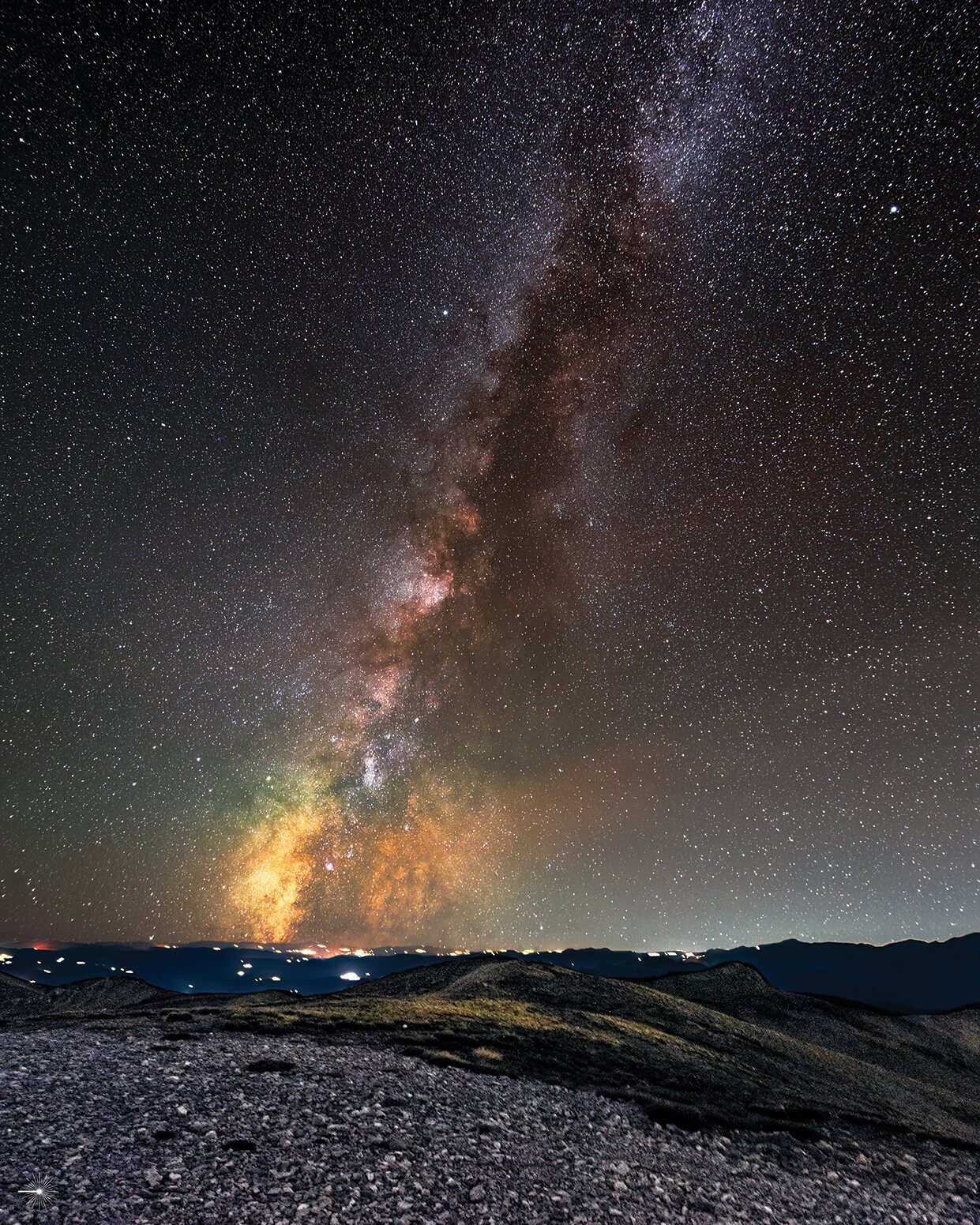
Mount Helmos, Greece · ~26,000 ly
Milky Way over Helmos
Looking at the Milky Way, you are looking edge-on into the disk of our own galaxy. The brightest region, toward Sagittarius, faces the galactic centre about 26,000 light-years away.
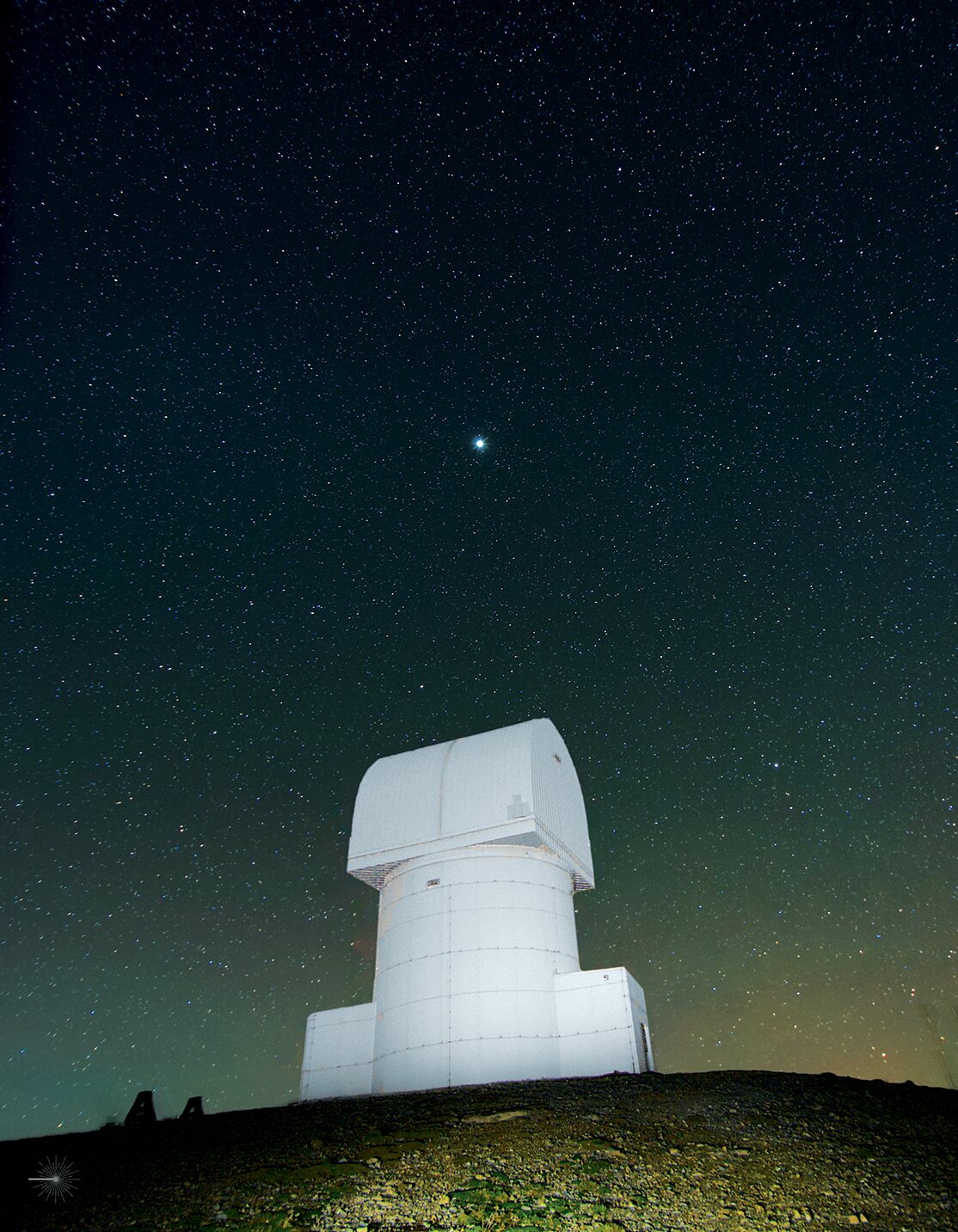
Aristarchos Telescope
Helmos Observatory
The Helmos Observatory houses the 2.3-metre Aristarchos telescope, at about 2,340 metres altitude — high above most of the atmosphere's moisture and haze, one of the darkest sites in Europe.
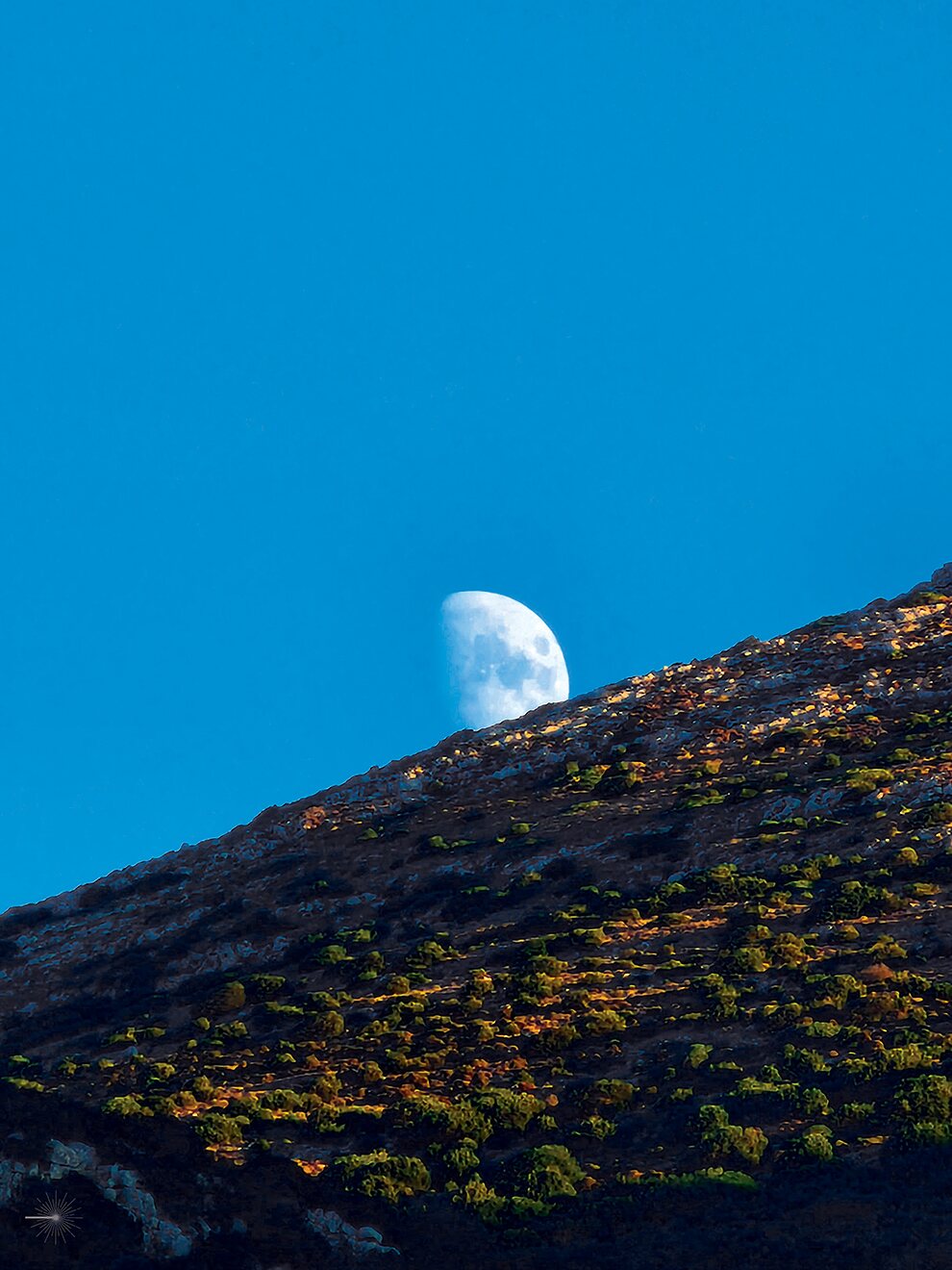
Sifnos, Greece
Moonrise over Sifnos
Near the horizon, the Moon is no bigger than when it is high in the sky — the 'Moon illusion' happens in our brains. A long lens compresses distance, making the Moon look large beside the hill.